People and safety
At Finnlines, social responsibility means ensuring employee wellbeing, competence development, equality, safety and respect for human rights. Skilled and committed employees working in a safe environment form the foundation of our operations.
People
Our employees are our most important asset. We promote wellbeing, professional development, equality and inclusion throughout the organisation. Our goal is to provide a safe, responsible and supportive work environment where people can grow, perform at their best and build long term careers.
Safety
The safety of our employees, vessels and operations is our highest priority. Safety is a shared responsibility across the organisation, and we continuously work to strengthen a proactive and preventive safety culture. Our approach combines compliance with strict international standards, continuous training and active employee involvement to ensure a safe and resilient working environment both at sea and in ports.
Safety is built on competence and training
Before entering service, vessels must comply with a wide range of international safety regulations. These regulations also require regular emergency drills to test equipment, lifesaving appliances and procedures, as well as the crew’s ability to respond effectively in unexpected situations. To strengthen competence, realistic scenarios are regularly simulated and crews also train together with authorities such as rescue services and border guard authorities.
All crew members have designated roles within the shipboard emergency organisation, including firefighting, passenger evacuation and first aid.
Sustainability Review 2025
To advance these goals and report on our steps toward environmentally sustainable maritime transport, we published our first voluntary Sustainability Review on 13 March 2026.
Security of supply
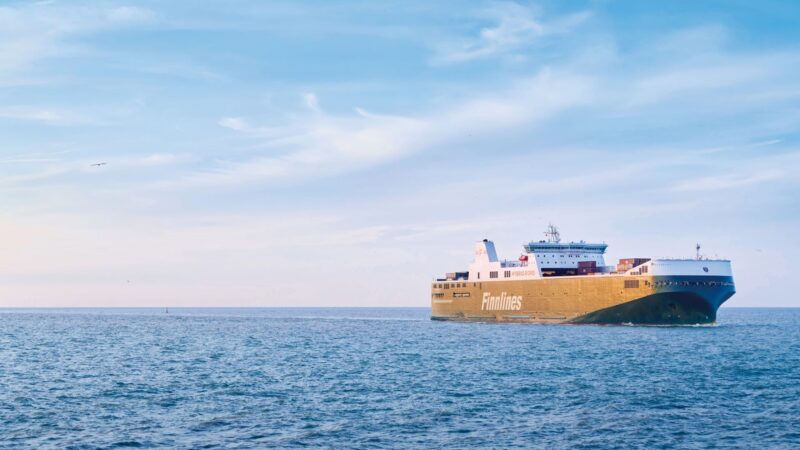
Finnlines is one of Finland’s key companies contributing to national security of supply. Finnlines transports more than one third of the wheeled cargo units shipped by sea between Finland and Estonia, Sweden and Germany.
In 2025, Finnlines transported more than 788,000 cargo units and 1,113,000 tonnes of non unitised freight. In practice, Finnlines connects Finland with the rest of Europe.
Decision making
As a member of the Finnish and Swedish Shipowners’ Associations, Finnlines actively participates in the development of EU and IMO regulations that support more sustainable shipping.
From an environmental and safety perspective, our most important stakeholders include flag state and port state authorities, shareholders, customers, employees, port operators, classification societies, suppliers, and local communities living near ports and fairways.