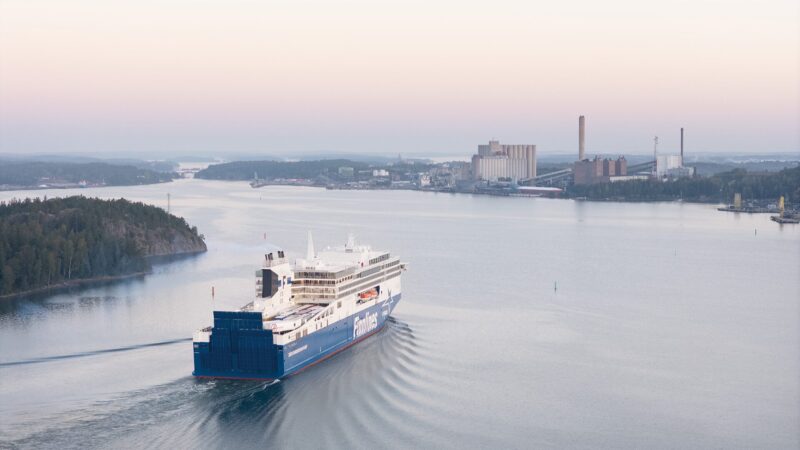
Chairman’s Review:
A global industry needs global decisions

Shipping plays a vital role in global trade and the functioning of the world economy. The sector accounts for a vast majority of international cargo flows, with more than 90 per cent of global trade carried by sea. At the same time, shipping is recognised as the most carbon-efficient mode of transport, accounting for approximately 2.9 per cent of global greenhouse gas emissions. The industry is committed to ambitious climate targets through to 2050.
The Grimaldi Group and Finnlines have long regarded sustainability as a strategic priority. This is reflected in their significant investments in fleet renewal, energy efficiency and emissions reductions. New vessels, alternative fuels, digital solutions and continuous operational development support the objective of reducing environmental impacts across the entire value chain, whilst, at the same time, these investments improve operational efficiency and strengthen long-term competitiveness.
Global and harmonised regulation
Shipping is by its very nature a global industry, which is why it requires globally harmonised regulatory solutions. Regional systems can lead to distortions of competition and undermine the effectiveness of emissions reductions as a result of regulatory fragmentation. Global solutions that are advanced through the International Maritime Organization (IMO) would provide the best conditions for achieving real and large-scale emissions reductions. A globally harmonised regulation would also reduce investment risk and support economies of scale in the development of new fuels.
The outcome of the IMO Marine Environment Protection Committee (MEPC) meeting that was held last autumn, where approval of the Net-Zero Framework was postponed by one year, was a disappointment for the industry. At the same time, it offers an opportunity to rebuild consensus. A clear and predictable regulatory framework is essential to ensure that investments in green technologies can continue in a planned and systematic manner. A global system represents the most efficient and equitable solution when compared with the current EU-level regulations affecting maritime transport.
Regional mechanisms currently implemented in the EU, such as the EU Emissions Trading System (EU ETS) and FuelEU Maritime, place significant cost pressures on European shipping companies and may affect the competitiveness of the entire transport chain. It is important that any regulation supports innovation and steers investments towards the production of new clean fuels and the development of a distribution infrastructure, enabling the transition to be carried out in a controlled and cost-effective manner.
Investments in the fleet of the future
The Grimaldi Group and Finnlines are pioneers in sustainable shipping. The latest hybrid ro-ro and ro-pax vessels, as well as ammonia-ready PCTC vessels, utilise the most advanced energy-saving and emissions-reduction technologies. In 2025, the Group announced an investment programme of nearly EUR 1.5 billion for nine methanol-ready vessels. Of these, Finnlines has ordered three, which will enter service on the Finland–Germany route in 2028–2029.
Vessels that are capable of operating on future fuels are, therefore, already on order, and the transition is progressing in concrete terms. However, the success of these investments depends on the sufficient availability of green fuels, the development of distribution infrastructure and competitive pricing. Methanol and ammonia, in particular, are key alternatives for reducing emissions in shipping. The green transition is within reach, but it continues to require close cooperation between regulations, industrial investments and, for example, the development of port infrastructures.
Finnlines’ long-term development
For decades, Finnlines has been committed to providing sea transport services that are both economically and environmentally sustainable. Over the past two decades, the company has ordered or acquired a total of 20 vessels and has made investments amounting to nearly EUR 2 billion. Finnlines’ extensive route network, high frequency, large cargo capacity and advanced digital services form a strong foundation that efficiently connects the key markets of the Baltic Sea region with Europe.
During the past year, the focus areas have included fleet optimisation, route profitability and responsible growth. Finnlines continued its determined efforts to strengthen its competitiveness in the Baltic Sea and North Sea markets. The company expanded its services by adding a weekly departure from Gdynia, Poland, to the North Sea & Biscay line. This new connection strengthens Finnlines’ network and offers customers in Poland more flexible and competitive solutions, as well as a direct link to the Grimaldi Group’s global network.
Cooperation for economic growth and stability
Free trade and open markets have historically supported economic growth and stability. Protectionist measures and the threat of trade barriers jeopardise these benefits and may also weaken the operating conditions for shipping. Sustainable solutions are found through cooperation, dialogue and common agreements.
Through cooperation with maritime cluster stakeholders, customers, authorities and other partners, shipping can continue to serve as a key enabler of both global trade and the green transition.
I would like to thank Finnlines’ customers and our many stakeholders for their valuable trust and support. I would also like to thank our entire personnel, both at sea and on shore, for their committed and professional work during 2025. We look ahead to the future with confidence.
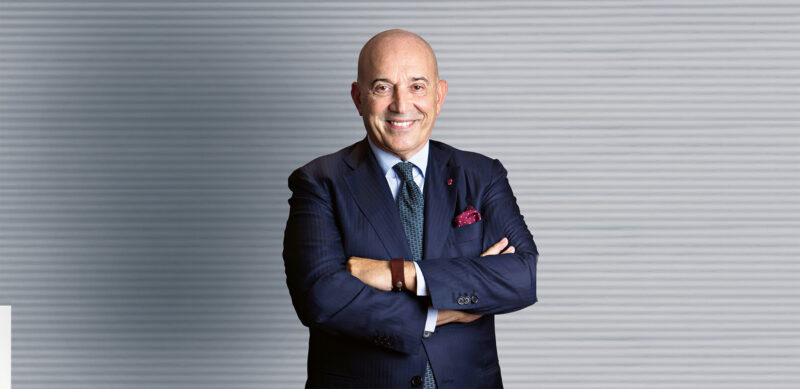
Emanuele Grimaldi, Chairman of the Board
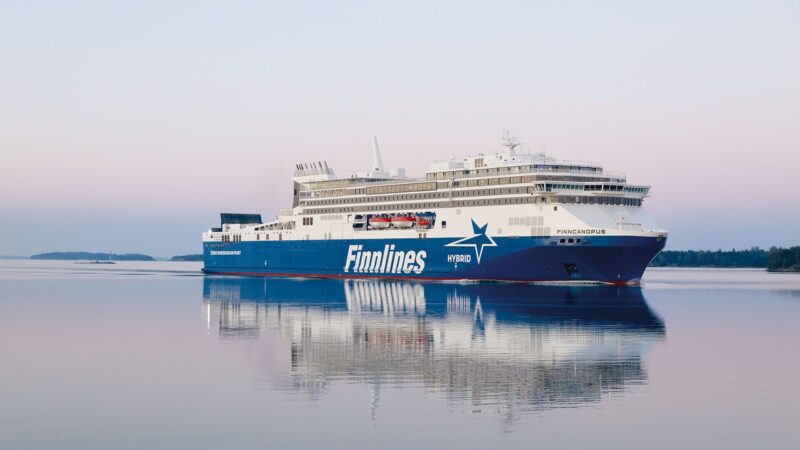
Key figures 2025
Highlights 2025