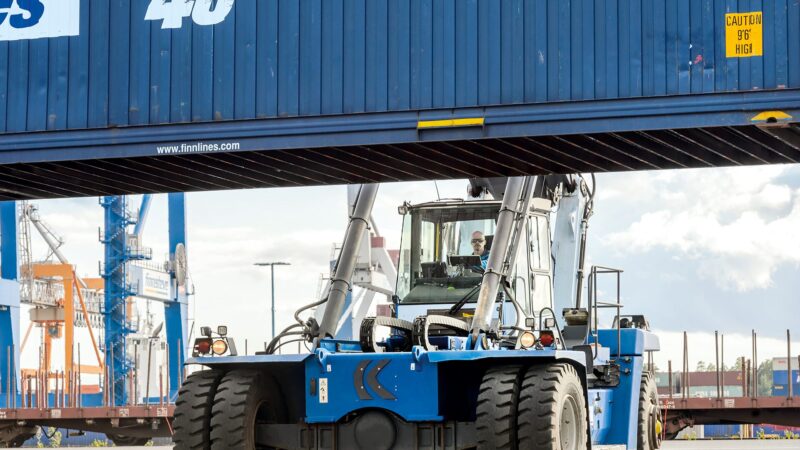
Freight services: Baltic routes, European reach
Finnlines is a leading force in shaping the future of logistics in the Baltic Sea region. An extensive route network, high frequency, large cargo capacity and advanced digital services efficiently connect the key markets of the Baltic Sea region with Europe.
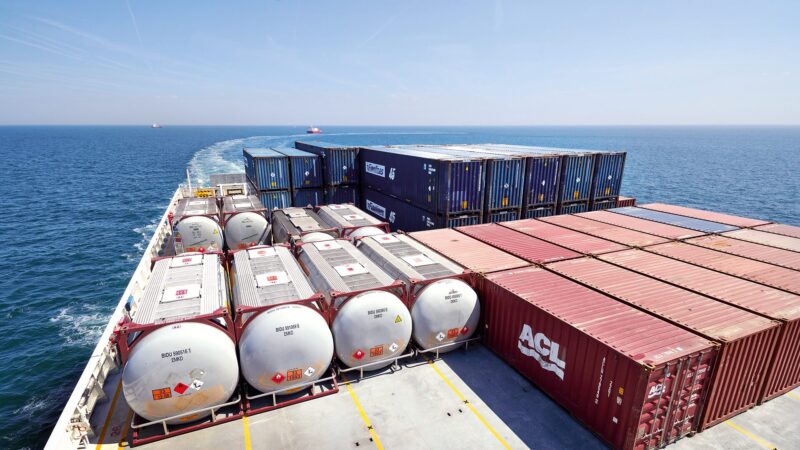
Finnlines operates an extensive route network with a modern and energy-efficient fleet. A total of 170 weekly departures enable reliable and regular freight services in the Baltic Sea, the North Sea and the Bay of Biscay. Digital services are continuously developed to meet the evolving needs of customers and to enhance the overall customer experience.
In 2025, Finnlines expanded its North Sea & Biscay Line service by adding Gdynia in Poland to the weekly rotation. This expansion further strengthens the company’s network coverage and offers customers more flexible and competitive transport solutions on Europe’s key trade routes.
Finnlines also launched the low-carbon Green Lane product in 2025, which enables customers to reduce their greenhouse gas emissions through the use of electricity or biodiesel. Interest in the Green Lane product has increased as the Emissions Trading System (ETS) will be fully applied to maritime transport in the coming year.
Financial and operational result
The Shipping and Sea Transport segment generated revenues of EUR 690.6 (676.3 in 2024) million, of which freight services accounted for EUR 585.3 million. Finnlines continued to play a key role in Nordic and European supply chains by transporting 788,000 cargo units, 71,000 cars (excluding passenger vehicles) and 1,113,000 tons of non-unitised freight.
Finnlines transports approximately 14,000 trucks or trailers per week, highlighting the company’s importance in Baltic Sea maritime logistics and in ensuring the security of supply.
Efficient connections to industrial needs
Finnlines provides regular ro-ro liner services in the Baltic Sea between Finland and the ports in mainland Europe and Scandinavia, and in the North Sea and the Bay of Biscay between ports in Finland, Poland, the United Kingdom, Belgium and Spain. Finnlines also offers a direct connection between Ireland and Belgium. Through transshipment via Zeebrügge, the Ireland connection is available for cargo to and from ports in Finland, Poland, the United Kingdom and Spain.
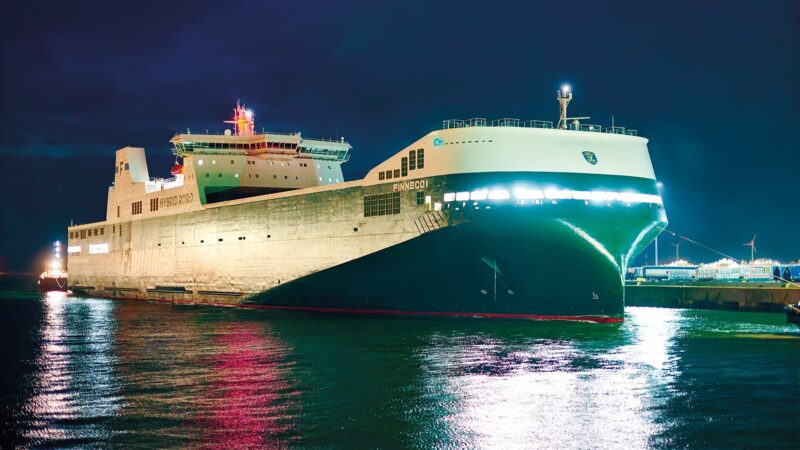
The North Sea & Biscay Line is designed to meet the needs of industrial cargo and freight forwarding companies. The service is operated with modern Finneco-class hybrid ro-ro vessels, which are designed to carry a wide variety of cargo types, including ro-ro, project, container and vehicle cargo, as well as special and oversized units.
Finnlines acts as an agent in Finland for Grimaldi Lines and Atlantic Container Line (ACL), connecting Helsinki, Kotka and Gdynia via Antwerp to the extensive Grimaldi Group network, which covers the Mediterranean, West Africa, North and South America, Asia and Australia.
Freight capacity with high frequency
Finnlines’ ro-pax network is a core element of the Baltic Sea transport system. It offers reliable schedules, modern tonnage and the capacity that is required for the smooth supply chain operations.
Three Star class ro-pax vessels operate daily between Helsinki and Travemünde, providing daily departures in both directions. The route has maintained its position as the largest carrier of unitised cargo between the two regions. For passengers, this route is the only direct sea connection between Finland and mainland Europe. Finnlines is investing in the route and has ordered three methanol-powered Hansa Superstar class ro-pax vessels, scheduled to enter service in 2028–2029.
The Naantali–Långnäs–Kapellskär route is a vital sea bridge between Finland and Sweden in terms of security of supply. The Superstar class vessels introduced in 2023–2024 provide daily capacity for more than 1,200 cargo units, which is sufficient to cover all truck and trailer traffic between the two countries.
On the Malmö–Travemünde route, Finnlines maintained a strong capacity with 24 weekly departures in each direction. The average freight capacity exceeds 1,000 units per day. The fast crossing time of approximately nine hours and the high capacity make the route an important intermodal link between Sweden and mainland Europe. In 2025, the route was served by the company’s Star-, Clipper- and Hansa-class vessels.
The new ro-pax connection between Malmö and Świnoujście in Poland, launched in 2024, continued to perform well. The route is operated with one ro-pax vessel, offering daily departures from both ports. The vessel’s 3,000 lane metres of cargo capacity further strengthen Finnlines’ position in the Baltic Sea logistic network. In 2025, the route was served by the company’s Clipper and Hansa class vessels.
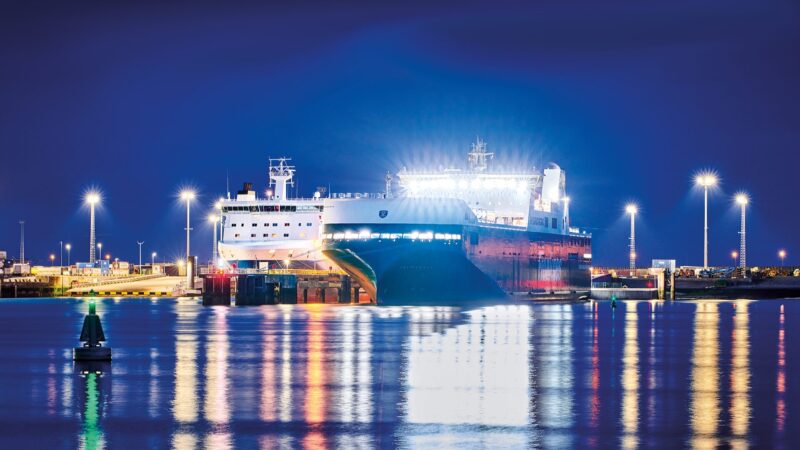
Finnlines fleet 2025
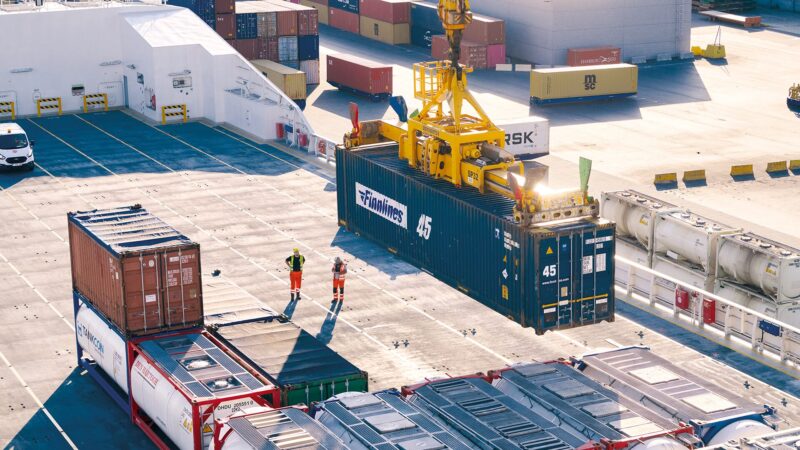
Quality 2025

Passenger services 2025
Our purpose, strategy and values 2025
Business environment 2025