New vessels: building resilience on the Finland–Germany route
Finnlines has taken a major step forward in the renewal of its Finland–Germany service as construction of the new Hansa Superstar vessels has begun in China. The new ro-pax ships will bring more cargo capacity, greater passenger comfort and lower emissions to one of Finland’s most important sea links.
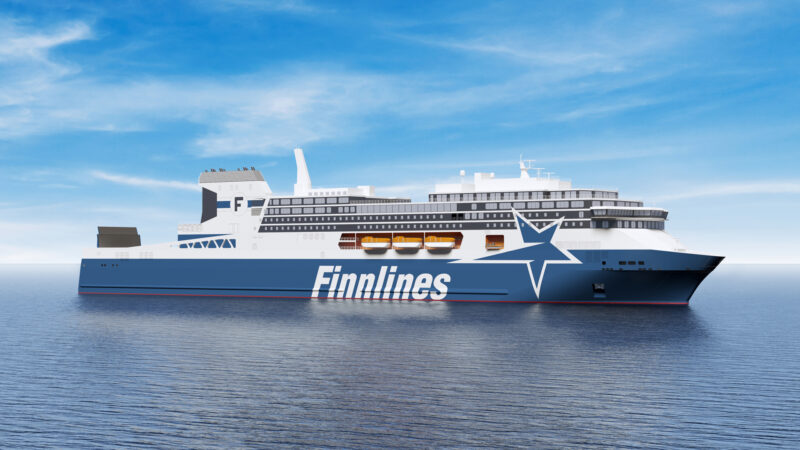
Construction of Finnlines’ new Hansa Superstar vessels began at the CMI Weihai shipyard in China on 15 May. The steel cutting ceremony marks the start of the building process and at the same time represent a step towards even more reliable and sustainable connection between Finland and Germany. Alongside the ceremony, the first tour of the full-scale mock-up cabins was also organised.
For customers, this means increased cargo capacity, smoother logistics and a stronger service offering on one of Finland’s most important sea routes.
Piece by piece, block by block
The steel cutting ceremony is one of the key milestones in shipbuilding. It marks the moment when construction begins and the first steel plates are cut.
The vessel is built from multiple steel blocks, which are assembled and welded together at the shipyard, gradually forming a unified hull piece by piece.
This milestone reflects several years of preparation. The vessels’ technical solutions, layout and other details are carefully finalised before construction begins.
Designed with strong expertise
The Hansa Superstar vessels are designed by Finnlines’ newbuilding team in close cooperation with experts from the Grimaldi Group.
The Finnish engineering company Deltamarin is responsible for the vessels’ basic design. Other Finnish companies are also involved:
Wärtsilä will supply methanol-fuelled engines and electrical solutions, Auramarine the low pressure methanol system, while Valmet will deliver the automation system. In addition, the project involves a wide range of Scandinavian and European suppliers.
The vessels were ordered in spring 2025, and the first of the three vessels is scheduled to enter service in summer 2028.
More capacity, more flexibility
The Hansa Superstar class ro-pax vessels combine high cargo capacity, innovative design and a comfortable travel experience. Each vessel is about 245 metres long and offers 5,100 lane metres of cargo space, around 1,000 lane metres more than the vessels currently operating on the route.
Passenger capacity is 1,000, with a total of 321 passenger cabins and 72 crew cabins, almost doubling passenger capacity compared to the current vessels.
For customers the increased capacity provides greater flexibility and reliability in their logistics. At the same time, it ensures efficient cargo flows of essential goods between Finland and Europe, from forest industry products and machinery to food, medicines and other everyday necessities.
Methanol and energy efficiency reduce emissions
The new vessels are specifically designed for the long Finland–Germany route and will sail under the Finnish flag. Sustainability has been a key focus throughout the design process.
Innovations such as fossil-free methanol, an optimised hull form and propulsion, air lubrication, waste heat recovery, heat pumps, battery banks and shore power will significantly reduce carbon dioxide emissions compared to current vessels on the route.
Supporting vital sea connections
Efficient and reliable sea transport plays a crucial role in the competitiveness, growth and security of supply in the Baltic Sea region. In Finland in particular, where around 95 per cent of imports and exports are transported by sea, dependable connections are essential.
Regular and frequent connections across Europe are vital for the smooth functioning of supply chains. Finnlines’ extensive route network ensures efficient cargo flows, and the new vessels will further strengthen these connections while also helping to address increasing cost pressures from environmental regulation and the evolving geopolitical landscape.
Technical specifications of the vessel
- Length / breadth: 243.6 m / 33.8 m
- Gross tonnage: approx. 69,000
- Lanemetres: 5,100 m
- Passengers: 1,000
- Passenger cabins: 321, 72 crew cabins
- Speed: 22.1 knots
- Ice class: 1A Super
- Delivery: spring 2028, entry into service in summer 2028
Technology and environmental solutions
- Methanol-fuelled dual-fuel engines
- Optimised hullform and propulsion
- Air lubrication
- Waste heat recovery
- Heat pumps
- Shore power (5 MW)
- 2 MWh battery system
The ceremonial start at the shipyard
The construction of Finnlines’ new Hansa Superstar class vessels officially began with a traditional steel cutting ceremony at the CMI Weihai Shipyard in China on 15 May 2026. The ceremony marked an important milestone in the company’s EUR 500 million investment programme.
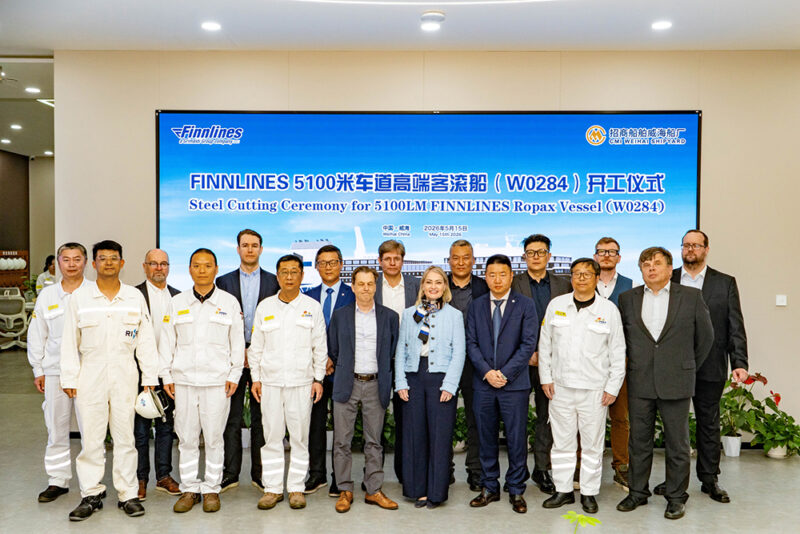
Representatives from Finnlines, CMI Weihai Shipyard management and project leaders, together with members of the RINA China team, gathered to mark the steel cutting ceremony for the first Hansa Superstar class vessel.
The ceremony brought together representatives from Finnlines, the shipyard and key project partners to celebrate the start of construction of the first vessel in the series. It was also a moment to recognise the close cooperation between the shipowner, the shipping company, the shipyard, and the international experts involved in the project.
During the event, Captain Juhana Nuru and Technical Superintendent Petri Leino initiated the automated panel line, symbolically marking the start of construction work.
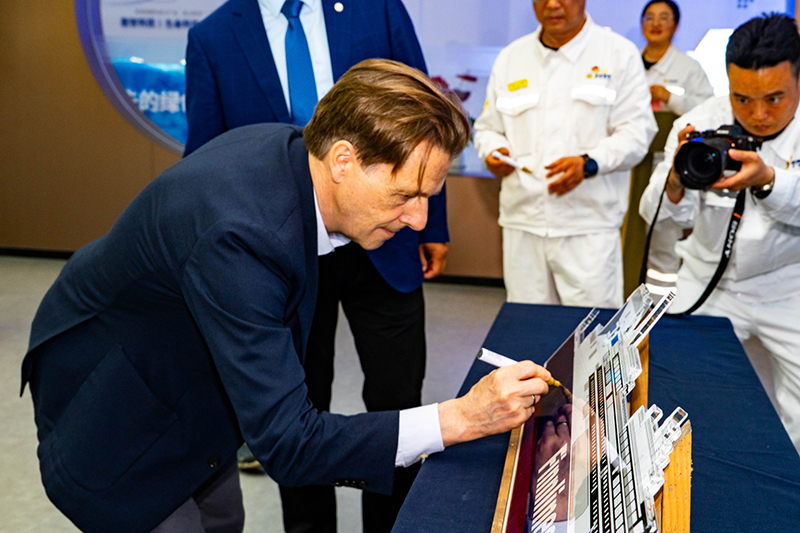
Finnlines’ Newbuilding & Projects Manager, Juha Ahia, signs the ceremonial illustration during the steel cutting ceremony.
Construction of the first vessel in the series of three Hansa Superstar class vessels is now under way. The construction of the second sister vessel is scheduled to commence in late 2026, followed by the third in summer 2027.
The first vessel is expected to be delivered in spring 2028 and enter into service in summer 2028. The second vessel delivery is scheduled in late 2028 and the third one during the first half of 2029, marking another important step in Finnlines’ fleet development and long-term commitment to sustainable maritime transport and passenger travel.
From design to reality
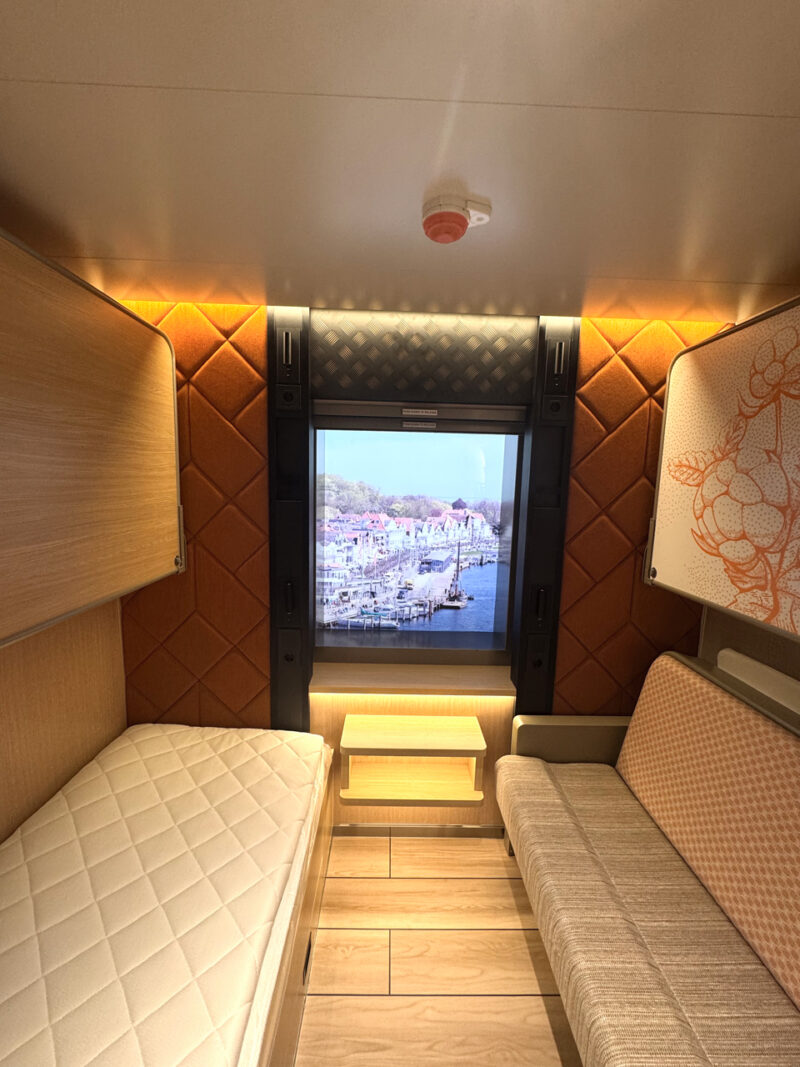
Alongside the ceremony, the first tour of the full-scale mock-up cabins was organised. These mock-ups play a vital role in validating layout, functionality, ergonomics, and installation requirements, helping identify improvements before production begins.
Meet Our Customers: FREJA Transport & Logistics: Driving sustainable and resilient supply chains
Finnlines’ digital self-service concept, Gateway, is now available

Editorial 1/2026
Finnlines boosts capacity on Ireland–Belgium route
Finnlines ensures maritime transport in all circumstances

Finnlines earns marketing awards in Finland and Germany
New terminal opened in Långnäs
Celebrating our people: seafarers honoured with gold medals
Green News: Efficiency and collaboration are in focus as fuel prices rise